Preparation and care-team questions · Updated 4 November 2026
Pregnancy With a Diabetes History: Questions for Your Prenatal and Diabetes Teams
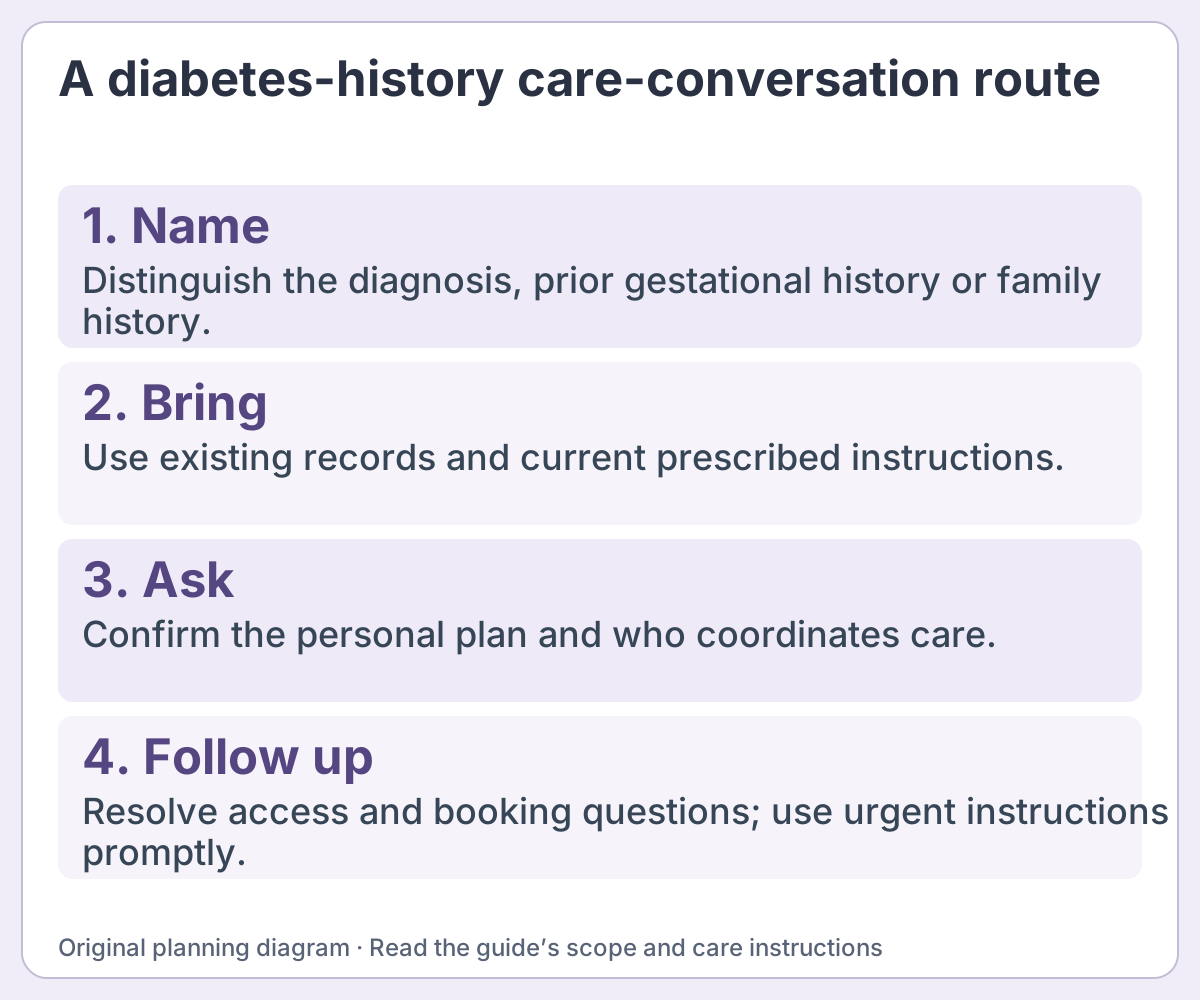
Start by naming the exact history, then ask your prenatal and diabetes teams which reviews, monitoring instructions and support apply now. Previous gestational diabetes, pre-existing diabetes and family history are different starting points.
Start with this
Bring the diagnosis or wording in your records, current medicines and the most important unanswered question. If already pregnant or planning pregnancy with a diabetes history, ask the appropriate teams about the next review. Follow existing urgent instructions without waiting to complete a folder.
Name the history before choosing the questions
“Diabetes history” can mean different things: type 1 or type 2 diabetes diagnosed before pregnancy, gestational diabetes in an earlier pregnancy, an unclear previous result or diabetes in the family. Start with the diagnosis or wording in your existing records and say when it applied. Do not assume these situations use the same screening or treatment plan.
The NHS diabetes-and-pregnancy page concerns type 1 and type 2 diabetes that were diagnosed before pregnancy. Its gestational-diabetes page covers high blood glucose that develops during pregnancy and usually goes away after birth. A previous gestational diagnosis still matters when planning or starting another pregnancy, but does not tell you your current diagnosis by itself.
If you do not know the exact history, tell the care team what you do know and ask which records or tests should clarify it. “I was told my glucose was high in my last pregnancy, but I do not know the diagnosis” is more useful than selecting a label from an online symptom list. A relative’s diagnosis is family history, not proof that you have the condition.
Bring the existing records that help the team coordinate care
Keep the previous diagnosis, relevant visit or discharge information and any recent test reports you already have. Record the report’s name and date, and let the clinician interpret it. If records are missing, ask how the service wants them requested; do not postpone contact until you have reconstructed everything.
Bring the current medicine information, including medicines for other conditions and any supplements the team needs to know about. Include the actual prescription or packaging instructions where possible. The NHS notes that treatment may need review during pregnancy. That is a conversation with the treating team, not an instruction to change medicines yourself.
If you already monitor glucose or use prescribed equipment, ask how the team wants existing information shared and who reviews it. Confirm the units and the record format with them. A general article cannot provide personal targets, interpret a reading or calculate an insulin dose from a number entered online.
| Area | A question to ask | What to bring or confirm |
|---|---|---|
| History | “Which exact diagnosis or previous history is recorded, and what needs clarification?” | Existing records, previous pregnancy details and relevant report dates. |
| Team coordination | “Who is responsible for diabetes questions during pregnancy, and how do the teams communicate?” | Named contact and the process for routine or urgent concerns. |
| Medicines | “Which medicines or supplements need review, and what instructions should I follow?” | Current medicines and the actual prescribed instructions. |
| Monitoring | “What personal monitoring plan, units and actions apply to me?” | Existing records/equipment information; the team’s written plan. |
| Screening and checks | “Which tests, eye or kidney checks, or other reviews apply to my history?” | Booking status and who arranges each recommended check. |
| Supplies and access | “What should I do if I cannot obtain supplies or get to a review?” | The specific barrier, next contact and confirmed alternative. |
| Birth and after birth | “What care, feeding support, monitoring or medicine instructions need a separate plan?” | Who will explain and record the individual birth/postpartum instructions. |
If you already have type 1 or type 2 diabetes
Ask the diabetes and prenatal teams what review is needed if you are planning pregnancy or have become pregnant. The NHS describes pre-conception support, pregnancy monitoring and treatment reviews for people with pre-existing diabetes. Your own team needs to decide what applies to your circumstances, including an unplanned pregnancy.
Clarify who answers medicine questions, who reviews monitoring information and which contact route to use if the plan is unclear. Ask for written personal instructions about low glucose, illness, vomiting or other problems the team says you need to act on. Do not create those instructions from a general target chart or another person’s sick-day plan.
Ask whether eye or kidney reviews, additional appointments or specialist support are needed and who arranges them. NHS guidance discusses these issues in pre-existing diabetes, but a website does not decide which appointment you need or when. Keep each agreed step and its booking status visible.
If an existing personal emergency instruction or an urgent symptom applies, follow that route promptly. Contacting the team should not depend on completing the preparation sheet or collecting several days of records first.
If you had gestational diabetes before
Tell the prenatal team about the previous gestational diagnosis, even if you felt well after birth or were told it had gone away. Ask which follow-up or screening is needed now, and whether the earlier records should be obtained. NHS guidance says previous gestational diabetes increases the likelihood of it happening in a future pregnancy and is relevant to earlier screening.
The NHS describes specific UK screening and follow-up arrangements. They should not be copied as the schedule for every reader or every country. Ask your own service which test is intended, when it is planned, how to prepare for it and who explains the result. Follow that service’s instructions rather than adopting a fasting or testing method from an article.
If you are planning a future pregnancy, ask what checks and support should happen beforehand. If already pregnant, contact the appropriate team and explain the prior history. A previous medicine plan, glucose target or monitoring arrangement does not automatically become the current plan.
If you have missing follow-up information, name the gap without blame: “I cannot find whether I had the recommended test after my last pregnancy.” The team can discuss how to clarify the current situation. Missing paperwork is not a reason to diagnose yourself from symptoms or assume there is no need to ask.
Turn an access problem into a clear request
Monitoring supplies, medicines, transport, appointments or interpretation can become barriers. Tell the relevant service exactly what is unavailable and when you need instructions. “I cannot obtain the supplies in my current plan” is a care-access question, not an invitation to substitute a different device or medicine without advice.
Ask who can help resolve the barrier and what to do while it is being addressed. Record the actual instructions and which person or service owns the next step. A reminder is useful, but does not confirm that a prescription, supply order or appointment has been completed.
A trusted helper can assist with an agreed collection, transport or call. Decide what information they need and whether you want them at the appointment. A helper should not interpret readings, calculate treatment or insist on seeing every private record as the price of practical support.
Ask for birth and postpartum instructions as separate steps
Pregnancy care is not the whole plan. Ask the team how diabetes-related care is coordinated around the birth, which instructions you and your support person need and what support the baby may need after delivery. These are individual discussions; a general guide should not select a birth date or procedure.
Ask who reviews medicines and monitoring after birth and how the instructions will be recorded before discharge. The NHS discusses treatment changes and follow-up after pregnancy, but an earlier dose or routine cannot simply be resumed on the authority of a website.
Keep the parent’s follow-up, the baby’s care and household help as separate tasks with appropriate contacts. If a question is unresolved, ask who will answer it. Do not let an administrative or support arrangement postpone an urgent concern.
CDC Hear Her advises immediate medical care for urgent maternal warning signs during pregnancy and in the year after birth. A seriously concerning change, trouble breathing, chest pain, fainting, severe headache, vision change or another warning sign belongs with prompt care, not an online interpretation of glucose or pregnancy symptoms.
Four situations to work through
These are fictional planning examples. They illustrate a useful question or support task; they do not assess a person’s health or predict an outcome.
Example 1: Previous gestational diabetes, but no recent follow-up record
A reader remembers the diagnosis from an earlier pregnancy but cannot find the later test record. They tell the prenatal team the previous history and the missing information and ask which records or assessment should clarify the current situation.
They do not assume they currently have diabetes or that the previous condition no longer matters. They ask about the actual screening plan and instructions from their service. The preparation sheet records the question and booking step; it does not select a test result, fasting method or universal screening date.
Example 2: Type 1 diabetes with unanswered pregnancy questions
A person with an existing type 1 diagnosis has become pregnant and is unsure who will review their current plan. They contact the diabetes and prenatal teams to clarify responsibility, medicine review, monitoring information and the appropriate urgent route.
They bring the existing prescribed instructions and equipment information. They do not use a general article to change a dose or set a glucose target. If a personal emergency instruction or urgent symptom applies, they follow that route promptly rather than waiting to assemble a complete appointment folder.
Example 3: Supplies or appointments are hard to obtain
A person cannot obtain something in their current care plan or cannot reach an arranged review. They name the specific barrier to the relevant service and ask what instructions and alternative arrangements apply while it is resolved.
A helper may assist with an agreed call, collection or ride, but does not decide a substitute treatment. The next step is recorded with an owner and confirmation status. A task marked pending stays pending until the relevant supply or appointment arrangement has actually been confirmed.
Example 4: The person only knows that diabetes runs in the family
A reader has a relative with diabetes but has not been diagnosed themselves. They describe the family history at the prenatal appointment and ask whether it changes the screening questions for their own circumstances.
They avoid selecting type 1, type 2 or gestational diabetes as a personal diagnosis based on a family label or a symptom search. The clinician decides the appropriate assessment and explains any test. A clear history question is useful without turning it into a risk score or a treatment plan.
Questions readers ask
Does a previous gestational diagnosis mean I have diabetes now?
Not by itself. Tell the care team the previous diagnosis and ask which records, follow-up or assessment clarify the current situation. The history is relevant to pregnancy care, but a general website cannot determine the current diagnosis.
Should I use targets from my last pregnancy?
Ask the treating team for the current personal plan, including monitoring instructions and actions. An earlier target, medicine dose or screening schedule does not automatically apply to a new pregnancy or a different stage of care.
Can this guide interpret a glucose reading or calculate insulin?
No. Share readings and the relevant units through the route your team requests. The guide helps organise the questions; it does not interpret a result, set a personal target or calculate treatment.
What if I feel unwell before the appointment?
Follow your existing personal urgent or emergency instructions and use appropriate care for a concerning change. CDC maternal warning signs call for immediate medical care. Do not delay contact to finish a record or wait for a routine prenatal visit.
Choose the next guide for your task
- Prenatal care preparation guides — Organise the care, communication and access questions for an appointment.
- Request an interpreter for maternity care — Prepare language support for the prenatal or diabetes discussion.
- U.S. prenatal insurance questions — Clarify coverage and access administration without deciding care.
- First-week after-birth questions — Keep individual discharge instructions and follow-up accessible.
Download the preparation sheet
Download the blank diabetes-history prenatal question sheet (TXT). Keep it private and use it for the care conversation. It does not diagnose diabetes, interpret a result, set a glucose target or calculate medicine.
Sources and scope
NHS diabetes guidance distinguishes pre-existing type 1/type 2 diabetes from gestational diabetes and supports discussing care and follow-up with the relevant teams. The gestational-diabetes page displays a last review of 8 December 2022 and a next review due of 8 December 2025; its UK schedules are not prescribed here as universal instructions. CDC supports urgent maternal contact boundaries. Personal tests, targets, medicines, birth decisions and sick-day instructions remain with the treating team.
- NHS: Diabetes and pregnancy
- NHS: Gestational diabetes — Overview
- CDC Hear Her: Urgent maternal warning signs and symptoms
Sources accessed 4 November 2026. This article is educational preparation, not an individual assessment or clinical treatment plan.